
Universal Health Insurance: Procedures for Accessing Services, the Importance of Disease Prevention, and the Expansion of the System
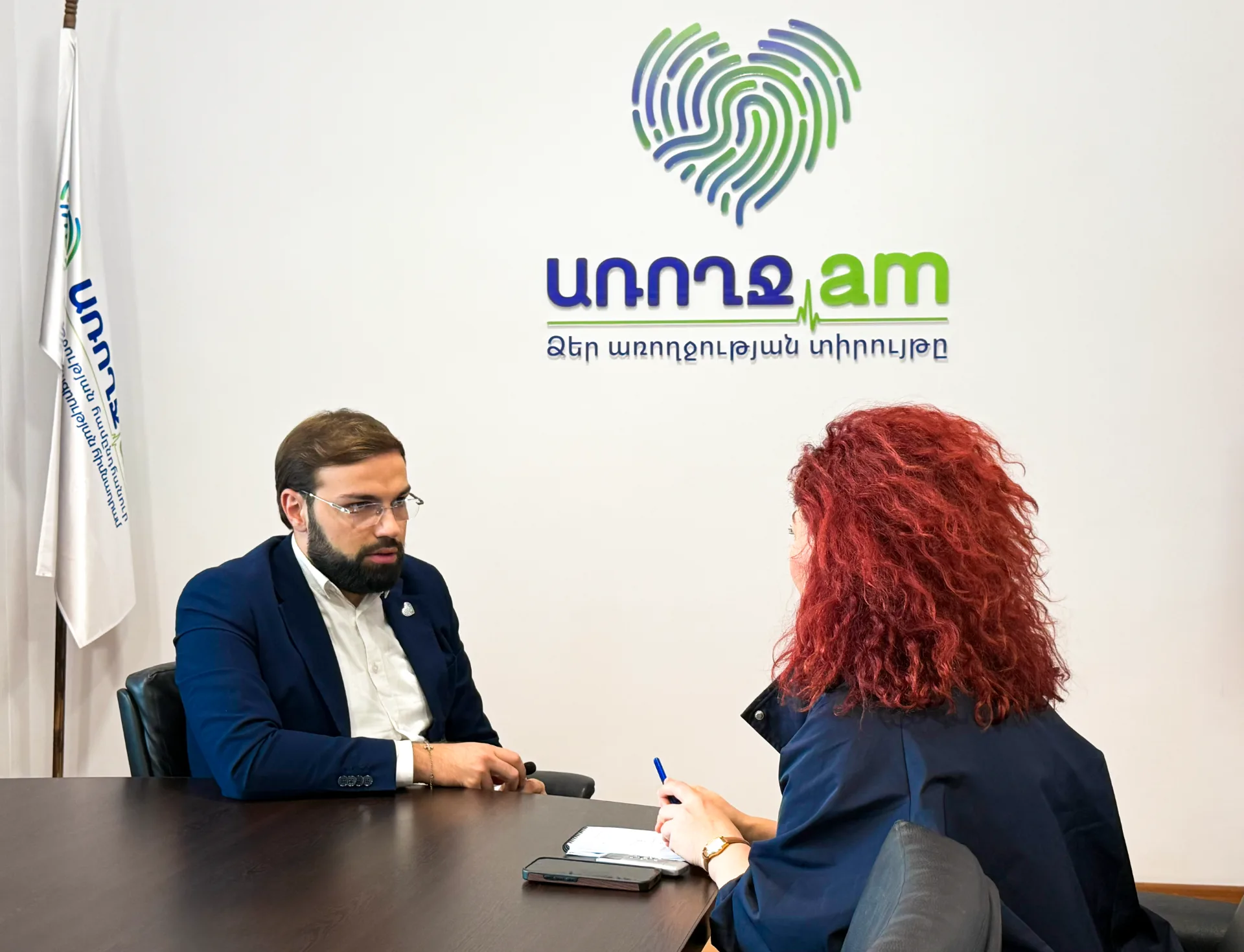
The procedure for accessing medical services under the Universal Health Insurance system, the importance of preventive healthcare, the principles of applying co-payments, and the prospects for expanding the system were among the issues addressed by Tigran Hovhannisyan, Head of the Contracts, Methodology and Quality Management Department of the Universal Health Insurance Fund, in an interview with the GorisLAB Community Development Center.
Presenting the procedure for accessing medical services under the insurance system, Hovhannisyan noted that the first step is to visit a physician at the primary healthcare (PHC) facility to which the patient is registered. Subsequently, the family physician assesses the patient's health condition, determines the scope of necessary examinations and specialist consultations, and issues a referral if there are appropriate medical indications. In this context, he emphasized the importance of developing a culture of accessing medical services and scheduling appointments. Appointments with physicians can be booked in advance through the ArMed app or by calling the medical facility. According to Hovhannisyan, adherence to the time slots allocated for specialist consultations and visits contributes to the effective management of patient flows and the improvement of service quality.
Hovhannisyan also spoke about the importance of developing a culture of preventive healthcare: early detection of diseases increases the likelihood of effective treatment and positive outcomes. In this regard, screening programs implemented under the insurance system play an important role. Hovhannisyan presented the breast cancer screening mammography program, noting that a referral from a family physician is not mandatory to undergo the examination.
Speaking about the services included in the insurance package, Hovhannisyan emphasized that their scope has been determined taking into account Armenia's healthcare priorities and the needs of the population. Priority has also been given to surgical interventions necessary in life-threatening situations. At the same time, it was clarified that restrictions related to certain services, including the number of ambulance calls, are based on relevant calculations.
Addressing questions regarding co-payments, Hovhannisyan noted that medical facilities may apply co-payments within the established maximum limits. Moreover, insured persons have the option of choosing specialists whose services do not require co-payments. Information about medical facilities cooperating with the Fund, specialists, and co-payments is available on the Fund's official website at uhif.am. Citizens can also contact the Fund's call center for additional clarification.
Hovhannisyan noted that scheduled inspections are being conducted throughout the country to monitor the quality of services provided at medical facilities cooperating with the Fund, compliance with the requirements established under the insurance system, and the proper provision of care to patients.
The interview also addressed the further expansion of the Universal Health Insurance system. In particular, starting January 1, 2027, the system will include employees earning up to AMD 200,000, individual entrepreneurs and notaries with gross income of up to AMD 2,400,000, individuals working under civil law contracts, taxi drivers, individuals receiving certain types of income, and those engaged in agricultural activities. Voluntary insurance coverage for related persons of insured individuals will also become available.
In conclusion, Hovhannisyan emphasized that the introduction and phased expansion of the system are aimed at improving access to medical services for the population. In the next, third phase, the insurance system is planned to be expanded with the aim of providing insurance coverage to the entire population of Armenia.