
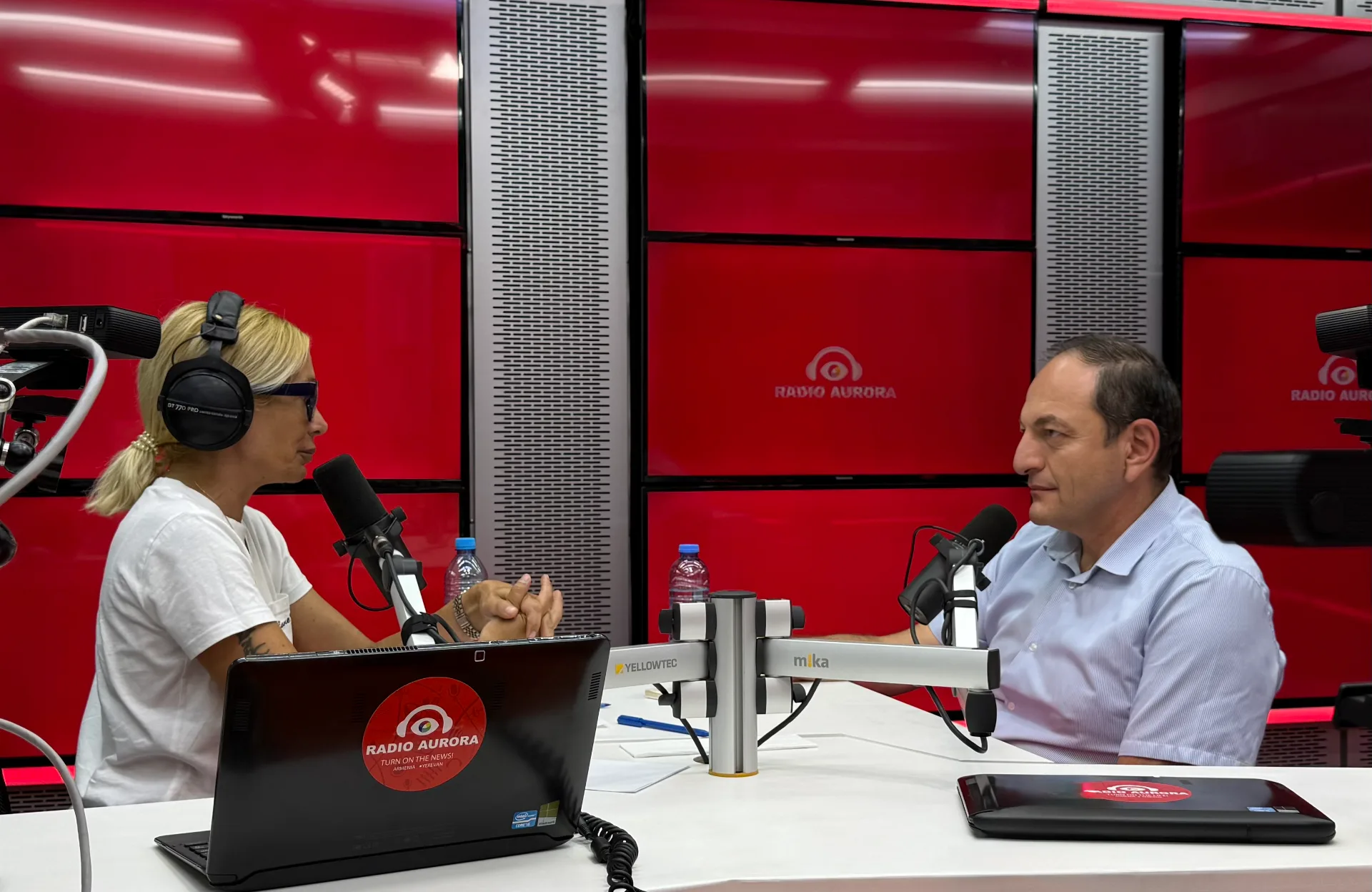
Over 1.8 Million Beneficiaries and New Beneficiary Groups Starting in 2027: Samvel Kharazyan on the Health Insurance System
On Radio Aurora, Samvel Kharazyan, performing the duties of Acting Director General of the Universal Health Insurance Fund, discussed the system’s current mechanisms, the expansion planned for 2027, as well as the principles of healthcare reimbursement and cooperation with medical institutions.
Today, more than 1.8 million beneficiaries are covered by the universal health insurance system. According to Kharazyan, the main principle of insurance is to ensure that healthcare expenses do not arise for citizens precisely at the moment when a health problem occurs. The insurance premium is paid in advance, and when necessary, an insured person can receive both medical services and reimbursable medicines in accordance with the established procedure.
Kharazyan also spoke about the upcoming expansion of the system. Starting in 2027, new beneficiary groups are expected to be included in the system, including individuals earning salaries of up to AMD 200,000. Since paying the full monthly insurance premium of AMD 10,800 could impose a financial burden on this group, under the proposed model, the employee will pay AMD 2,000 per month, the employer will pay AMD 4,400, and another AMD 4,400 will be subsidized from the state budget. The Fund will receive data on individuals earning salaries of up to AMD 200,000 from the State Revenue Committee, and their insurance status will be activated automatically.
Starting in January 2027, individuals providing passenger transportation services by passenger taxis will also join the system. Under the preliminary model, they will submit an electronic application through the Fund’s website, while payments can be made through electronic wallets, banking applications, or the payment platform available on the website.
The interview also addressed the remuneration of doctors providing primary healthcare (PHC) services. According to Kharazyan, doctors receive funding based on the number of people registered with them, as well as the services provided within the framework of certain diseases. Kharazyan stated that the remuneration of family doctors has increased by at least 40–50%, and this trend will continue.
Speaking about cooperation with medical institutions, Kharazyan emphasized that the system is open and transparent. Medical institutions can review the requirements for joining the system, the services included in the package and their reimbursement rates, and then submit an application for cooperation.
Referring to the insurance package, Kharazyan noted that dental services are also included to a limited extent. In particular, preventive visits are provided for children aged 6 and 12, specialized dental consultations are provided when necessary, and dental prosthetics are available for people aged 65 and older.
As for medicines, the list of medicines reimbursed under the insurance system currently includes around 1,300 medicines, including those intended for the treatment of cardiovascular diseases, diabetes, and certain oncological diseases. According to Kharazyan, the universal insurance package is designed based on the principle of addressing conditions that create the greatest disease burden among the population. Therefore, the system primarily includes the services and medicines that are most necessary for the prevention and treatment of major diseases.
In conclusion, Kharazyan emphasized that the system is continuously evolving and that, as financial capacities expand, the range of reimbursable services and medicines is also expected to increase.