
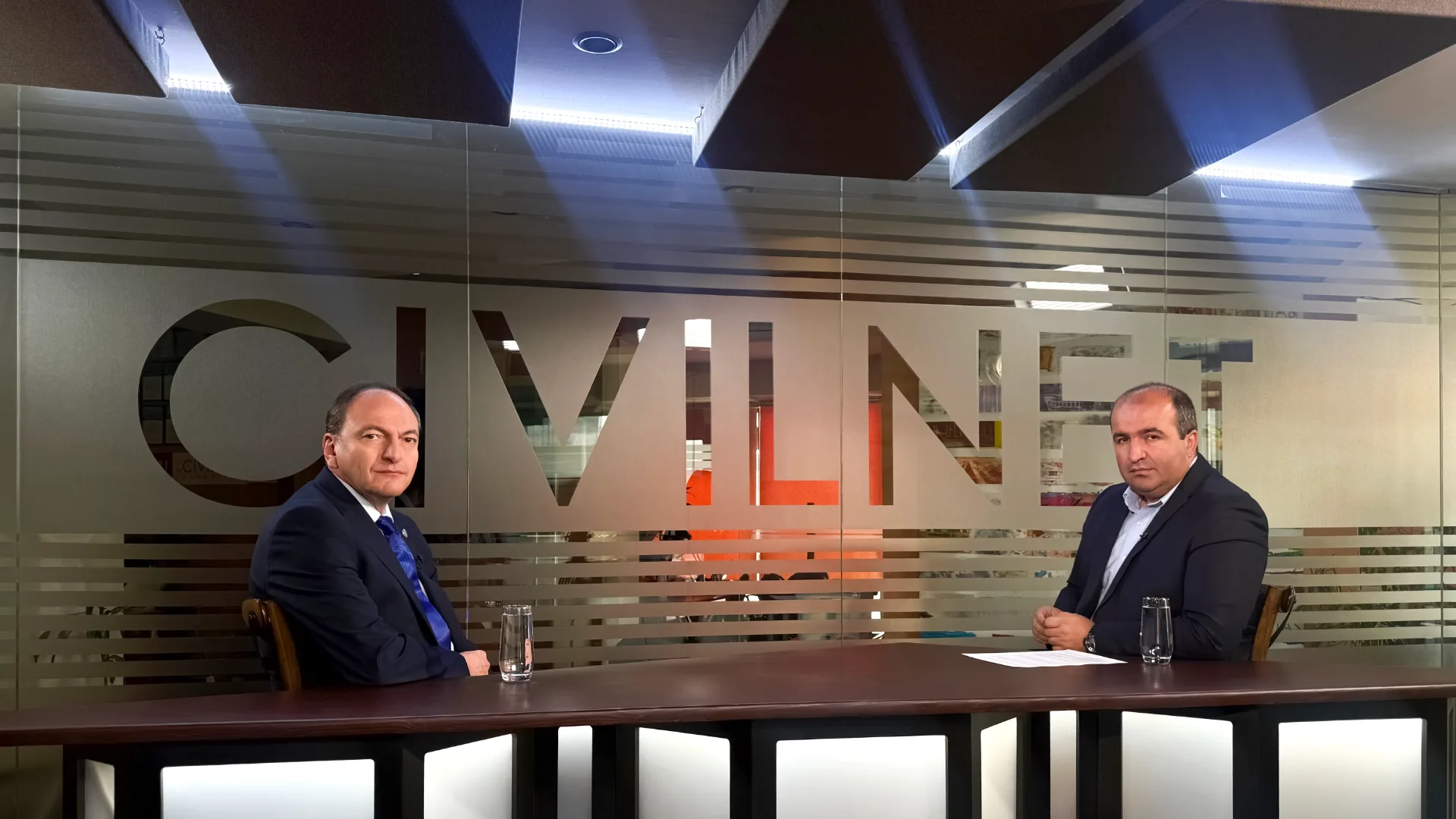
Samvel Kharazyan’s interview with Arshaluis Mghdesyan on CivilNet’s studio.
At the CivilNet studio, Samvel Kharazyan noted that the full expenditure report for January–June has been published on the Fund’s official website. The report includes beneficiary statistics as well as a comprehensive overview of reimbursements made to medical organizations and pharmacies.
2029: Mandatory screening examinations
The law stipulates that, starting in 2029, undergoing screening examinations will become a mandatory condition for activating the insurance package. In the meantime, beneficiaries are encouraged to undergo preventive examinations.
“Screening is not limited to detection; it also includes further diagnostic examinations and treatment, which are fully reimbursed within the insurance package,” Kharazyan added.
Quality of examinations: unified standards across Armenia
Mr. Kharazyan assured that the quality of examinations is the same in the regions and in Yerevan, as the same tests and equipment are used. In addition, insured citizens can find the complete list of recommended preventive examinations for their age group on the Fund’s website.
New groups joining the system and 400,000 new beneficiaries
New groups will join the system between 2027 and 2029. According to Samvel Kharazyan, preliminary estimates indicate that approximately 400,000 new citizens will join the system next year. Simplified payment mechanisms through electronic platforms are already being discussed.
From 80% to 2%: a sharp reduction in out-of-pocket expenses
One of the most notable statistics concerns healthcare expenses paid directly by citizens:
Before the introduction of the system (up to 2025): out-of-pocket expenses accounted for up to 80% of total healthcare expenditure.
During the past 6–7 months: out-of-pocket payments (co-payments) accounted for only 1.8–2%.
For medicines: the average co-payment is 6.5–7%, compared with 30–40% previously.
“Health should not depend on a person’s ability to pay, and that is precisely the direction we are moving in,” Kharazyan concluded.
Next steps: actuarial calculations and potential revision of insurance contributions
Every year, during discussions on budget execution, the authorized body—the Ministry of Health—may initiate a review of the insurance contribution amount, taking into account inflation, changes in service prices, and the expansion of the system.
“For now, we do not anticipate an increase for 2027, but in the long term, everything will depend on the assessment of risks,” Samvel Kharazyan concluded.