
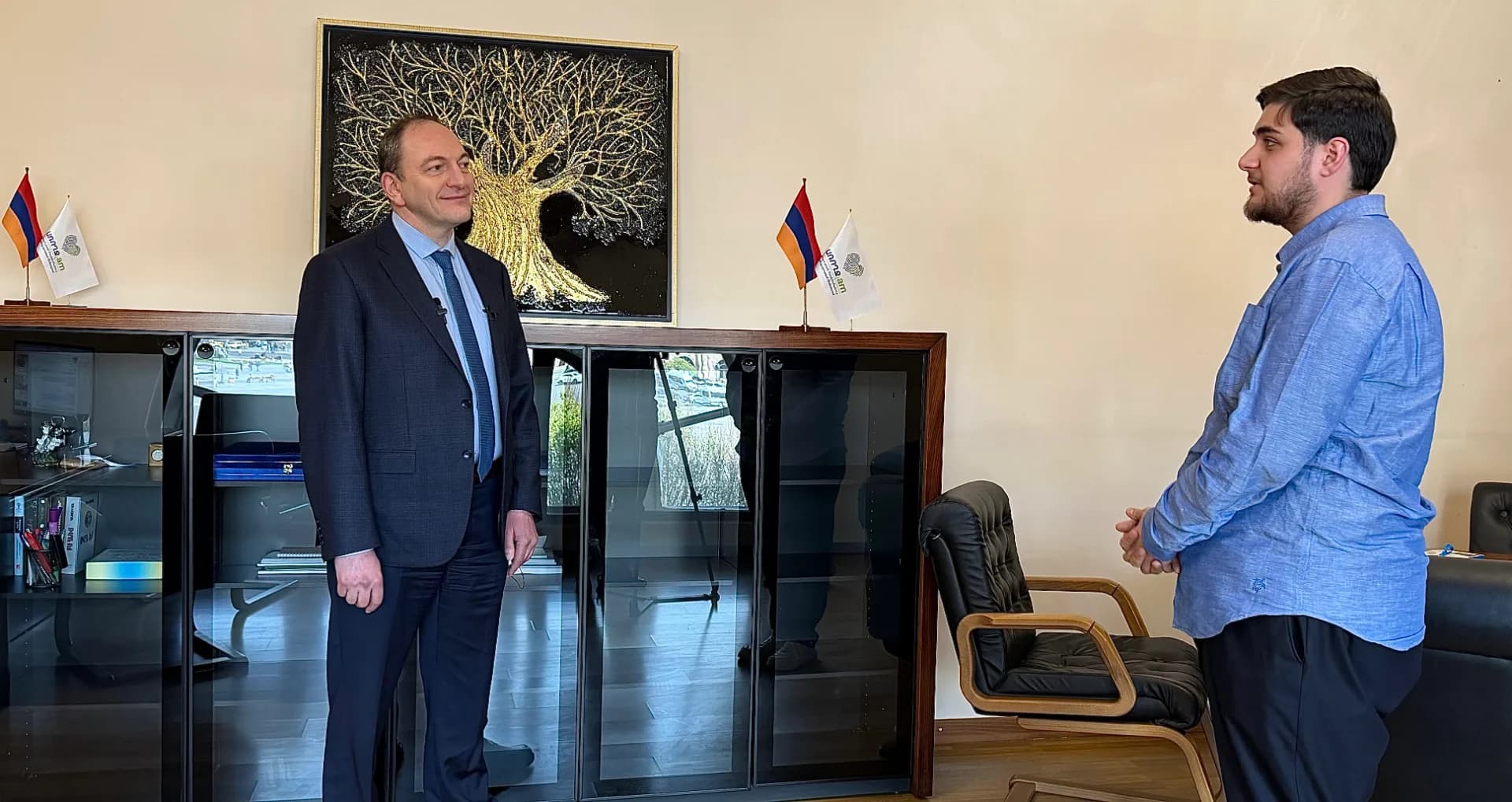
Samvel Kharazyan gave an interview to Public Television
Acting Director of the Universal Health Insurance Foundation, Samvel Kharazyan, gave an interview to Public Television, presenting the changes being implemented within the framework of the introduction of the Universal Health Insurance system and their impact on the healthcare sector.
According to Kharazyan, in the past, both primary healthcare providers—therapists, pediatricians, and family doctors—as well as specialized physicians were mainly reimbursed based on a capitation model, depending on the number of people registered under their care. However, this approach did not fully reflect the actual workload of doctors or the volume of services provided. Under the new system, primary healthcare providers, in addition to capitation-based payments, receive additional compensation for consultations, management of diseases treated in outpatient settings, as well as work carried out within preventive and screening programs. Importantly, remuneration is also calculated based on quality indicators.
A similar approach is applied to specialized physicians. According to Kharazyan, this change is not only more equitable from a financial perspective but also allows for a better assessment of the actual demand for different medical specialties. He noted that in Armenia there are specialties with high demand but limited accessibility for the population, particularly in the regions. The new financing model encourages specialists to provide services in the regions by offering appropriate compensation, contributing to a more balanced system in both the short and long term.
Kharazyan also emphasized that continuous monitoring is being carried out: service volumes, utilization rates, and other indicators are being analyzed, while close cooperation with specialized medical associations is maintained. This enables timely responses to emerging challenges and the implementation of necessary adjustments, ensuring the sustainable development of the system.