
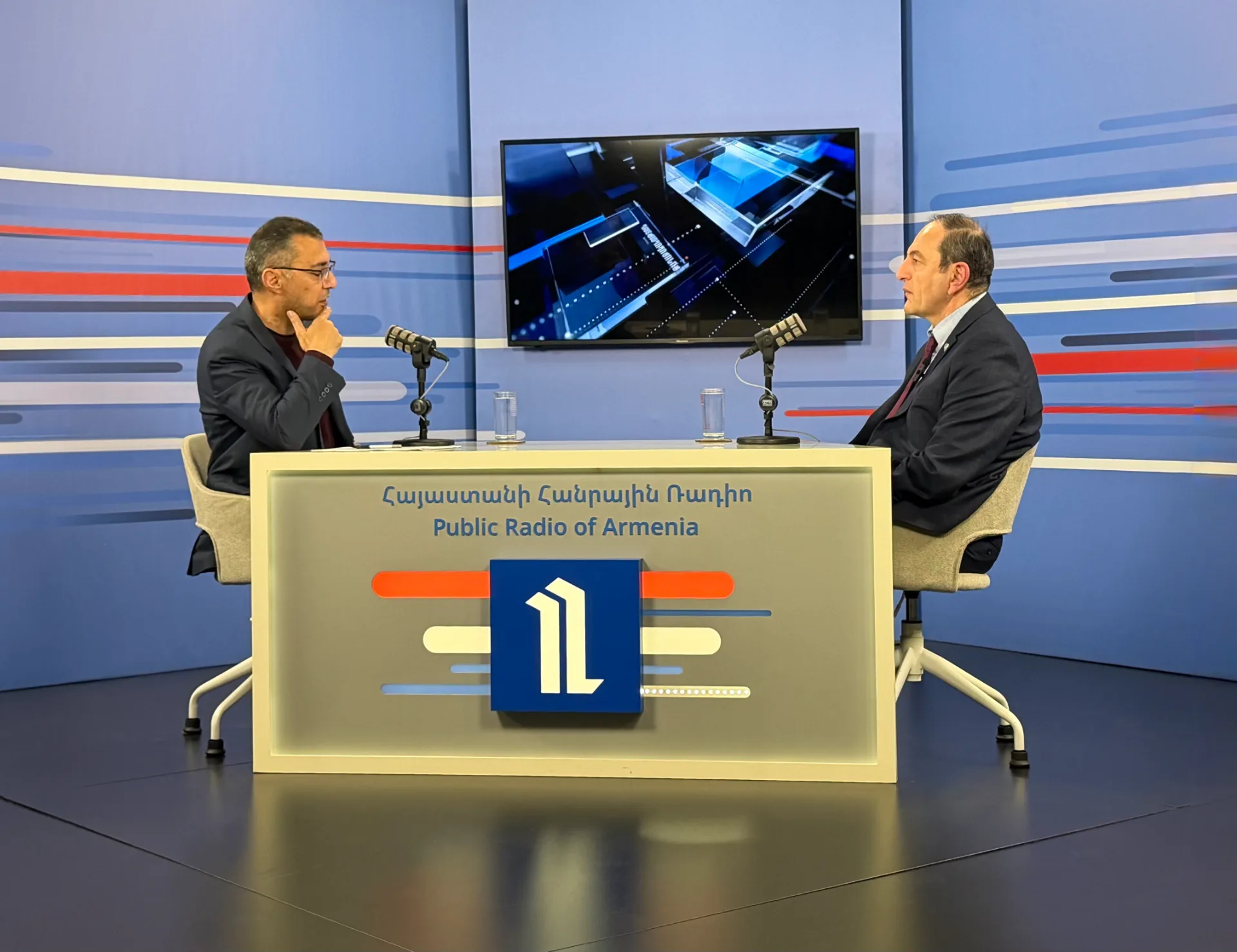
Samvel Kharazyan presented the main principles of UHI system financing and the medical services provided within the framework of the system on Public Radio of Armenia
Samvel Kharazyan, Acting Chief Executive Officer of the Universal Health Insurance Foundation of Armenia, spoke in an interview with the “Without Footnotes” program of Public Radio of Armenia about the principles of the Universal Health Insurance system, changes in healthcare financing, and the medical services covered within the insurance package.
According to Kharazyan, the Universal Health Insurance system is not based on belonging to a specific social group. While access to services under the former state-funded healthcare system was largely tied to social status, the goal of the UHI system is to ensure coverage of the entire population within three years.
Speaking about healthcare financing, Kharazyan noted that the law defines both the methodology for calculating insurance contributions and the Foundation’s expenditure directions, including the size of administrative and reserve funds. The calculation of insurance contributions is based on healthcare utilization rates and the costs associated with the most expensive diseases, particularly oncological and cardiovascular conditions. At the same time, both the insurance package and the insurance contribution amount are the same for everyone, while the state implements subsidy policies for certain groups.
The interview also focused extensively on the full continuum of cancer prevention and treatment. Kharazyan stated that the insurance package includes prevention programs for major types of cancers, including screening programs for colorectal, cervical, and breast cancer. If abnormalities are detected during screening, more advanced diagnostic examinations are also covered within the insurance framework. The system additionally covers subsequent stages of treatment, including surgeries, radiation therapy, and medication treatment within certain limits. Up to AMD 1.2 million is allocated for chemotherapy and immunotherapy reimbursement, while radiation therapy provided through highly advanced technological equipment is fully covered within the insurance package. Kharazyan noted that the goal of the program is to reduce citizens’ financial burden as much as possible — from early detection of disease to treatment and follow-up care.
Kharazyan also emphasized the importance of the primary healthcare (PHC) level. According to him, one of the priorities during the implementation of the system has been the development of the capacities of family doctors, therapists, and pediatricians, as well as the improvement of financing mechanisms and the increase of remuneration. As for narrow specialists, the insurance model allows citizens to freely choose their preferred specialist, while the Foundation reimburses the provided services, encouraging the development of a more competitive and efficient healthcare environment.